
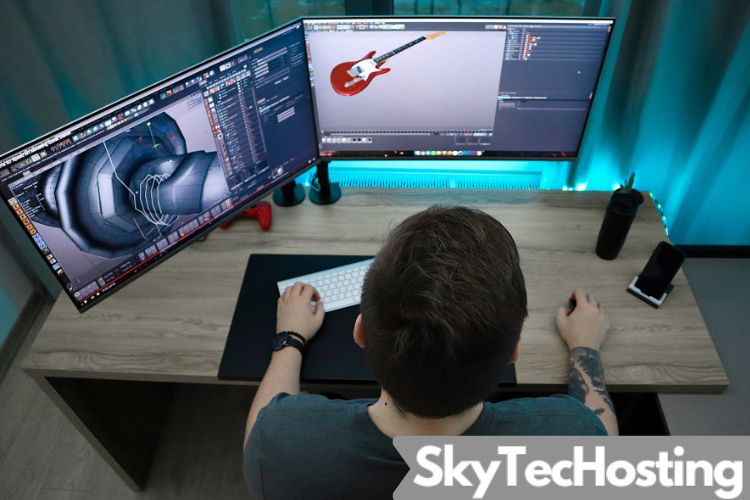
The digital advertising landscape has become more competitive than ever. Consumers scroll through thousands of visual messages every day, making it increasingly difficult for brands to capture attention within just a few seconds. Traditional video production still plays an important role, but computer-generated imagery has opened entirely new possibilities for marketers looking to create memorable campaigns without the limitations of physical filming.
Today, businesses across industries – from automotive and consumer electronics to cosmetics and real estate – are investing in CGI production to create immersive visual experiences that would be expensive, impractical, or even impossible to achieve with conventional filming techniques.
Why CGI Has Become a Strategic Marketing Tool
Modern CGI is no longer limited to blockbuster movies or video games. It has evolved into a versatile business solution capable of supporting product launches, social media campaigns, television commercials, and digital advertising.
Unlike traditional production, CGI offers brands complete creative freedom. Products can be showcased before manufacturing begins, environments can be designed without location scouting, and visual concepts can be modified at any stage of development. This flexibility significantly reduces production constraints while enabling companies to experiment with bold creative ideas.
Another advantage is consistency. Digital assets created for one campaign can be adapted for multiple channels, including websites, online stores, social media, outdoor advertising, and presentations. This makes CGI an efficient long-term investment rather than a one-time production expense.
The Growing Demand for CGI Animation
Animation plays a unique role in visual storytelling because it allows brands to explain complex products and services in a clear, engaging way. Whether introducing new technology, demonstrating manufacturing processes, or presenting architectural projects, animated visuals simplify information while keeping audiences interested.
Professional studios combine artistic direction with technical expertise to produce realistic lighting, physics simulations, particle effects, fluid dynamics, and cinematic camera movement. These elements help create visuals that feel believable while maintaining complete creative control throughout production.
Choosing an experienced CGI animation company ensures that every stage – from concept development and storyboarding to modeling, animation, rendering, compositing, and post-production – is handled within a structured production pipeline. This approach helps maintain quality, improve collaboration, and deliver assets suitable for various marketing channels.
Industries Benefiting from CGI
Although CGI first gained popularity in entertainment, its commercial applications now extend across nearly every industry.
Automotive manufacturers use CGI to visualize vehicles before prototypes are available and create dynamic promotional videos without relying on expensive location shoots.
Consumer electronics brands produce highly detailed product animations that reveal internal components and demonstrate functionality impossible to capture with standard cameras.
Real estate developers generate realistic architectural walkthroughs long before construction is completed, helping investors and buyers better understand future projects.
Retail and e-commerce businesses create visually engaging advertisements that highlight product features while maintaining a consistent brand identity across global campaigns.
Even healthcare and industrial companies increasingly rely on CGI to communicate technical information through clear, visually appealing animations.
Combining Creativity with Technology
Advancements in rendering software, procedural modeling, simulation tools, and artificial intelligence have accelerated many stages of CGI production. AI can assist with concept generation, texture creation, or repetitive technical tasks, allowing artists to focus on creativity and storytelling.
However, successful commercial projects still depend on experienced professionals. Strong visual direction, composition, timing, animation principles, and artistic judgment remain essential for producing content that connects emotionally with audiences. Industry professionals increasingly view AI as a productivity tool rather than a replacement for skilled CGI artists.
Looking Ahead
As marketing continues shifting toward visually driven platforms, CGI is expected to become an even more important component of digital communication strategies. Brands need content that is flexible, scalable, and capable of standing out across multiple channels while maintaining high production quality.
Companies that invest in high-quality CGI today are better positioned to produce engaging campaigns, shorten creative production cycles, and adapt quickly to changing market demands. Whether the goal is launching a new product, creating memorable advertising, or building a stronger visual identity, CGI provides the creative possibilities needed to meet the expectations of modern audiences.
